


Posted by Rachel Schwartz on 1/12/2021 to
Residential

The type of finish on your cookware can make a huge difference in the kitchen. They each have a variety of pros and cons from price, reliability, and weight to maintenance and upkeep and the best type of foods to cook when using them. While pots, pans, skillets, and lids can be purchased as part of a set, it may be better to mix and match your cookware depending on your needs, personal preference, and the practical usability of various types of cookware in your kitchen.
If you are interested in mixing and matching your cookware, most experts in the field suggest a cast iron skillet, an enameled cast iron Dutch oven, and stainless steel pots, pans, and roasting pan to create a basic cookware set. Depending on need, adding a nonstick skillet, carbon steel skillet, small copper saucepan, or large aluminum pot to the mix is also recommended. However, regardless of whether or not you mix and match your cookware or buy a complete set with the same finish, it's important to do your research and choose the cookware finish best suited for your kitchen needs and personal preferences.
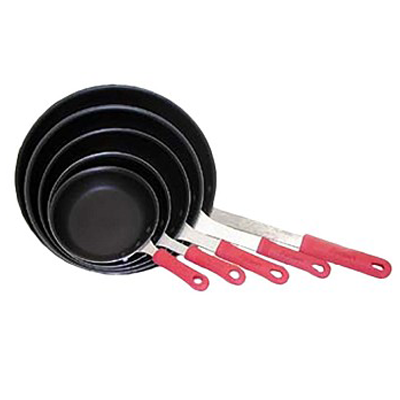
Aluminum
Aluminum cookware is not only one of the most lightweight options, it is also one of the more inexpensive options for cookware. It's a popular choice for larger pots, pans, and roasting pans. Aluminum is often found in the core layers of multi-layer steel cookware pieces and many nonstick cookware pieces are made from coated aluminum. If you have ever seen "natural finish" mentioned in relation to cookware, it is most likely referring to uncoated aluminum which is also common. This natural finish is not only cheap but also durable and effective. However, it can also be reactive when in prolonged contact with acidic ingredients, meaning that some of the aluminum can leach out into your food. While this is not a health risk, it can cause food to become slightly discolored or add a metallic taste to the food. The quality of the aluminum itself can also make a big difference as low quality aluminum can warp with extreme heat changes--like putting a hot skillet into cold water--and can become stained. A large aluminum skillet is a popular choice among aluminum cookware as it is reliable, affordable, and great for cooking poultry and other meat.
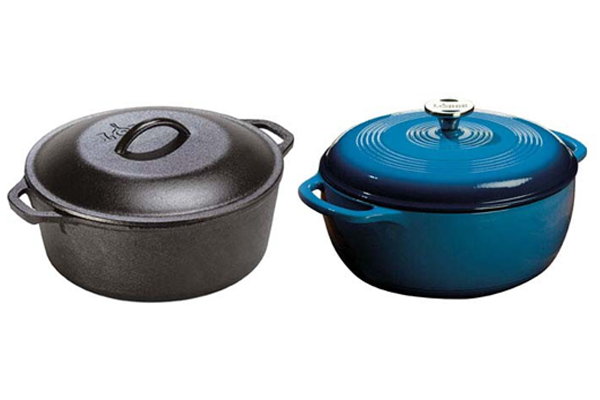
Cast Iron
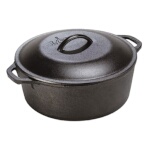
The heaviest of the cookware options, cast iron also has the best longevity if cared for properly. A cast iron skillet or Dutch oven can easily be passed down to children and grandchildren if kept in good condition. This longevity is also good as cast iron is one of the most expensive cookware options available and one reason why many may only have one or two cast iron pieces in their cookware arsenal as opposed to a complete set. Practically indestructible, cast iron pieces are slow to heat up but do hold heat well once they have been heated. Cast iron does require seasoning to create a nonstick-like coating prior to using it. Like aluminum cookware, cast iron is also reactive to acidic ingredients as the acidity can strip away the seasoning and leach iron into your food. This does not pose a health concern--in fact, some believe this is another way to add iron to their diet--but it can add a metallic flavor to the food.
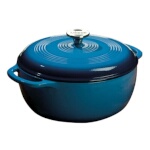
Enameled cast iron is also a popular choice for cookware as it doesn't require seasoning (and thus, runs no risk of leaching iron into your food) but it can chip if accidentally gouged with a metal utensil. Neither type of cast iron should ever be put in the dishwasher but for regular cast iron, this is especially crucial. Soap should never be used on a cast iron piece unless you are re-seasoning it as the soap strips away the seasoning. Not only is the seasoning important when cooking food, it also protects the metal and prevents the cookware from rusting. The most popular cast iron and enameled cast iron pieces are skillets, griddles, and Dutch ovens.
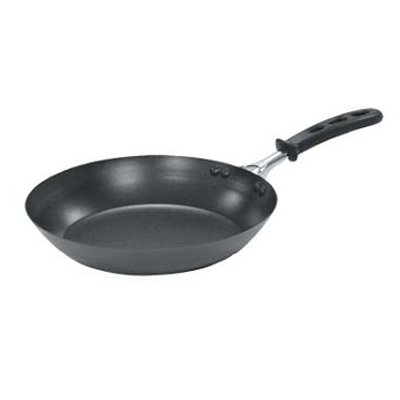
Carbon Steel
Perhaps a little less known among the general customer, carbon steel cookware is similar to cast iron in many ways. It also requires seasoning to develop a nonstick coating, can rust with seasoning, and requires a bit more labor when it comes to maintenance than other finishes. However, skillets made with carbon steel are extremely useful. They may take a little longer to heat than some of the other finishes, but once they are heated, they conduct heat well. Carbon steel cookware can be reactive to acidic ingredients but to a much lesser degree than either aluminum or cast iron cookware. The best choices for carbon steel cookware include skillets, roasting pans, and saucepans. And as with cast iron pieces, carbon steel cookware should not be placed in the dishwasher.
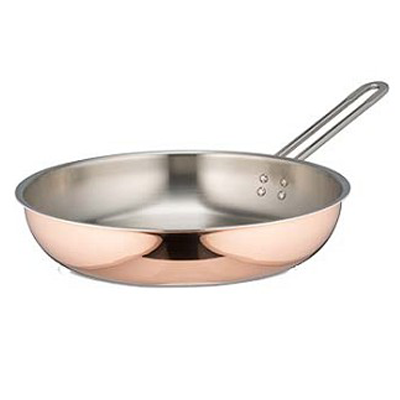
Copper
Copper cookware may be the most aesthetically pleasing type of cookware finish on the market, it is also the most expensive because it is a precious metal. Copper is very responsive to heat and will heat up the fastest of the cookware options in this list. Because of this, it is often sandwiched between layers of other metals in multi-layer cookware pieces such as frying pans. Although expensive, if you are going to invest in copper cookware it is important you get pieces that are of good quality and have a thick layer of copper as inexpensive copper cookware often only has a thin layer of copper which will not be enough to evenly heat well. Because copper can also be reactive, most copper pieces are lined with another type of metal--usually tin or stainless steel. Like cast iron and carbon steel cookware, copper cookware needs routine maintenance--to maintain its shiny exterior, the copper must be polished regularly. Despite this, copper cookware is a favorite finish among some professional chefs.
Nonstick
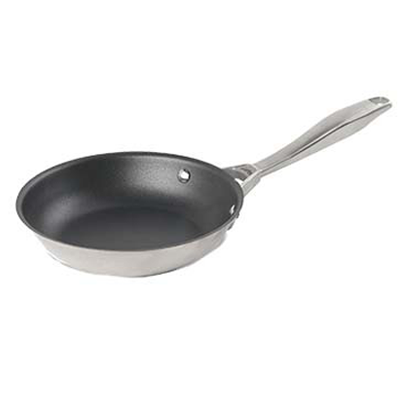
Nonstick cookware generally comes with one of two finishes--polytetrafluoroethylene, which many know as Teflon, or a thin layer of ceramic. Both are good, convenient options for cooking but both can be easily scratched if used with metal utensils or put into the dishwasher. Spray oils should also not be used on nonstick cookware as the chemicals in the oils can break down the nonstick coating. Unlike cast iron, nonstick cookware has a relatively short lifespan as most nonstick pieces are made using thin aluminum or steel. If you want a longer life from your nonstick cookware, a higher-quality option is anodized aluminum. It is a little more expensive but has a longer lifespan, can be heated to any temperature (Teflon, for example, shouldn't be heated above 500°F), and has an oxidized surface that is nonreactive to acidic ingredients and won't burn off over time like nonstick coatings. Great for cooking quick-cooking foods such as eggs or pancakes, the most popular nonstick cookware item is a nonstick skillet.
Stainless Steel
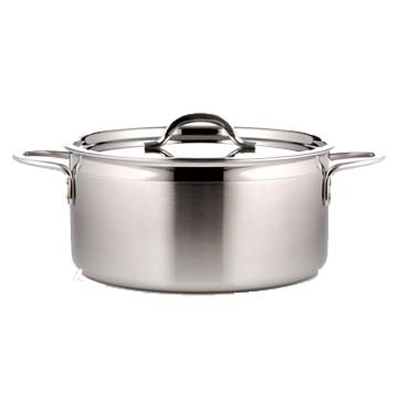
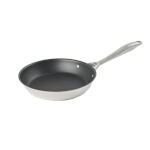
Stainless steel is the recommended choice for your basic, everyday pots and pans as it is nonreactive and difficult to damage. On its own, stainless steel is a poor conductor of heat, causing food to stick to the surface easily which is why it's important to make sure your stainless steel cookware is clad stainless steel. The presence of the word "clad" is vital as it means that a layer of aluminum or copper has been sandwiched in among the steel. This extra layer in the middle is the game-changer and turns stainless steel cookware from a headache into the preferred choice. As with nonstick cookware, spray oils should not be used with stainless steel cookware as it can leave behind a filmy residue and cause your food to burn or stick to the surface. Instead, to create a nonstick surface, heat up a thin layer of oil in the pan before cooking any food. Most stainless steel cookware can be used both on the stove or in the oven. While some stainless steel pieces can go in the dishwasher, it is generally not recommended. A stainless steel roasting pan is a great option for holiday cooking while a deep-set pan or saucepan is ideal for cooking with acidic ingredients.
Tagged Products
$31.99 Each
Usually Ships in 24 Hours.
Promo
Bon Chef 60303-2TONESS - Classic Country French Collection Pot, 5.7 qt., 10-1/8"
Bon Chef 60303-2TONESS
$207.34 Each
Usually Ships in 24 Hours.

Shop all Bon Chef


Sale
Usually Ships in 24 Hours.

Shop all Vollrath
Login or Add to Cart
