


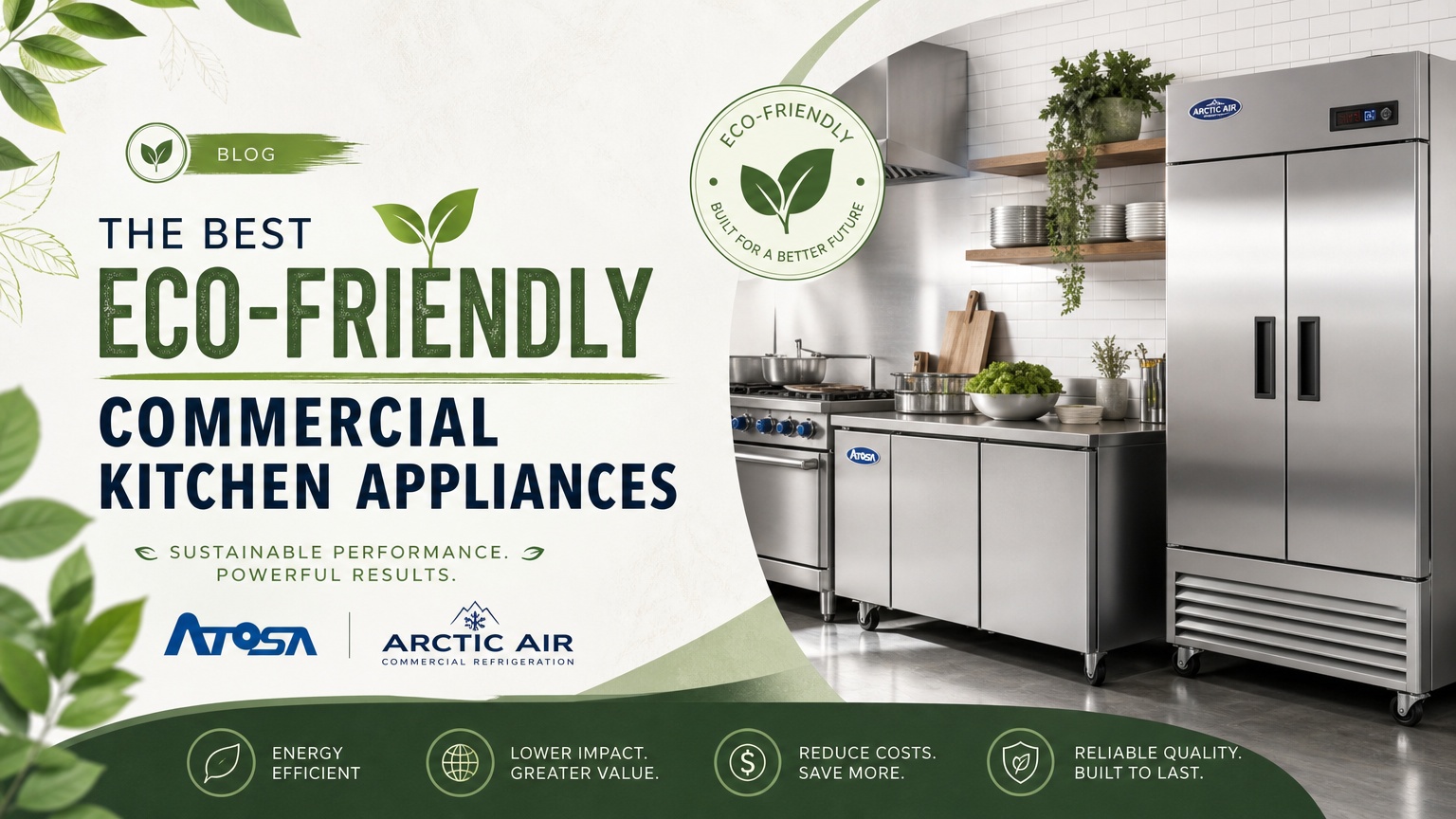
The Best Eco-Friendly Commercial Kitchen Appliances
Sustainability is quickly becoming a priority in commercial kitchens as restaurants and foodservice businesses look to reduce energy costs, conserve resources, and meet growing consumer expectations. Eco-friendly commercial kitchen appliances are designed to deliver high performance while minimizing environmental impact, making them a smart investment for both operational efficiency and long-term savings.
Energy-Efficient Refrigeration Systems Are Essential
Refrigeration systems run continuously, making them one of the largest energy consumers in any commercial kitchen. Upgrading to energy-efficient refrigerators and freezers can significantly reduce electricity usage while maintaining consistent cooling performance. ENERGY STAR-certified models are especially valuable, as they are designed to use 10 to 50 percent less energy than standard equipment. Brands like Atosa and Arctic Air play a key role in providing reliable commercial refrigeration solutions. Atosa is known for its wide range of high-performance kitchen equipment, while Arctic Air has built a reputation for producing durable and affordable refrigeration products for commercial use since 1995. These brands offer options such as reach-in refrigerators, prep tables, and undercounter units that help kitchens operate efficiently while supporting sustainability goals.
Induction Cooking Equipment Improves Efficiency
Induction ranges and cooktops are among the most energy-efficient cooking appliances available for commercial kitchens. Instead of heating the surrounding air, induction technology transfers heat directly to cookware, reducing energy waste and speeding up cooking times. This method can achieve efficiency levels of around 90 percent, far surpassing traditional gas or electric cooking systems. In addition to energy savings, induction equipment eliminates combustion emissions, improving indoor air quality and creating a safer work environment for kitchen staff.
High-Efficiency Dishwashers Maximize Water Savings
Water usage is another major concern in commercial kitchens, particularly in high-volume operations. Modern eco-friendly dishwashers are designed to use significantly less water than older models or manual washing. Some units use just a few gallons per cycle, compared to over twenty gallons when washing dishes by hand. These appliances also incorporate sensors that adjust water and energy usage based on load size and soil levels, ensuring efficient operation without compromising cleaning performance. By upgrading to high-efficiency dishwashers, businesses can reduce both water consumption and utility costs.
Combi Ovens Offer Multi-Functional Sustainability
Combi ovens are increasingly popular in eco-friendly commercial kitchens because they combine multiple cooking methods into a single appliance. By integrating steam, convection, and combination cooking, these units can replace several traditional appliances, reducing overall energy consumption and equipment footprint. This versatility not only saves energy but also improves kitchen productivity and consistency. Manufacturers like Atosa offer combi ovens with advanced controls and efficient cooking technology, helping kitchens streamline operations while minimizing waste and energy use.
Energy-Efficient Fryers and Cooking Equipment Reduce Waste
Fryers and other heavy-duty cooking appliances are essential in many commercial kitchens, but they can consume large amounts of energy if not optimized. Eco-friendly models are designed with improved insulation and faster heat recovery systems, which reduce energy consumption and cooking times. Some advanced systems also include built-in filtration, extending the life of cooking oil and reducing waste. Automation technologies further enhance efficiency by standardizing processes and minimizing human error, making them valuable additions to high-volume kitchens.
Smart Ventilation Systems Improve Overall Performance
Ventilation is often overlooked in sustainability discussions, but it plays a crucial role in energy efficiency. Smart ventilation systems adjust airflow based on cooking activity, reducing energy use when appliances are idle. By controlling airflow more effectively, these systems help lower HVAC costs and maintain a comfortable working environment. This contributes to overall kitchen efficiency while supporting environmental goals.
Food Waste Reduction Equipment Supports Green Goals
Food waste is a major issue in the foodservice industry, and eco-friendly appliances can help address it directly. Commercial composters and food waste digesters convert organic waste into reusable materials or reduce the volume sent to landfills. By integrating these solutions into daily operations, kitchens can significantly reduce their environmental footprint while also cutting waste disposal costs. This aligns with the growing focus on circular economy practices in the food industry. Why Eco-Friendly
Equipment Matters for Commercial Kitchens
Adopting eco-friendly commercial kitchen appliances offers more than just environmental benefits. ENERGY STAR-certified equipment helps businesses save money by reducing energy consumption, often leading to substantial long-term cost savings. In addition, sustainable practices enhance brand reputation, attract eco-conscious customers, and prepare businesses for stricter environmental regulations. For restaurants operating in competitive markets, these advantages can make a meaningful difference. Final Thoughts on Sustainable Commercial Kitchens The best eco-friendly commercial kitchen appliances are those that deliver efficiency, durability, and smart functionality. From energy-efficient refrigeration systems by trusted brands like Atosa and Arctic Air to induction cooktops and high-efficiency dishwashers, each upgrade contributes to a greener, more cost-effective kitchen. As sustainability continues to shape the future of the foodservice industry, investing in eco-friendly equipment is no longer optional. It is a strategic move that supports both environmental responsibility and long-term business success.
