Posted by Rachel Schwartz on 9/8/2020 to
Product Spotlight

The oven and stovetop are the most important appliances in your kitchen when it comes to preparing meals whether that be in your home or a restaurant. Ranges can come in a variety of styles and sizes, but their source of power is the most hotly contested feature. Gas and electric ranges each have their own benefits and drawbacks but determining which type is right for you depends on a combination of personal preference, cooking style, and building set-up.
Chefs, professional cooking shows, and real estate agents tend to prefer and place more emphasis on having gas ranges over electric. Many chefs prefer gas over electric because it allows for better precision and control over the cooking process while real estate agents point it out in showings because it is a rarer feature to have in residential homes as the majority of residential homes in the United States do not have gas service and so must have an electric range.
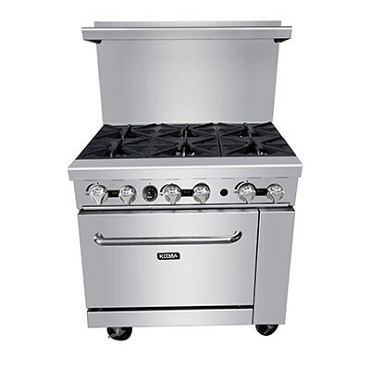
Perhaps the most commonly stated benefit of owning a gas range is the ability to control the heat when using the stove. When a burner on a gas range is ignited, the heat is instant and heats up much more quickly than an electric range. During the cooking process, this flame is easily adjustable and the heat, in turn, is more easily controlled. Another benefit to gas ranges is that once the burner is turned off and the flame extinguished, the food immediately stops cooking due to lack of heat. This means no need to worry about accidentally overcooking or burning your food if left on the stove for a few minutes after the burner is turned off.
Gas ranges can also use either propane or natural gas, both of which are relatively inexpensive and clean burning. When it comes to using the oven component of a gas range, it's important to remember that the top of the oven will be the hottest as the heat is not evenly distributed and that the heat will be more humid than in an electric oven as the gas gives off moisture. This means that while the appliance can give you that perfect uneven look when broiling food, items being baked will most likely need to be rotated between racks so that it bakes evenly. Cleaning and maintaining gas units is not necessarily any more difficult than electric ones, however, the burner grates will need to be moved to clean the space underneath them and some moving parts can be accidentally knocked out of place resulting in potential difficulties in igniting the stove the next time it is used.
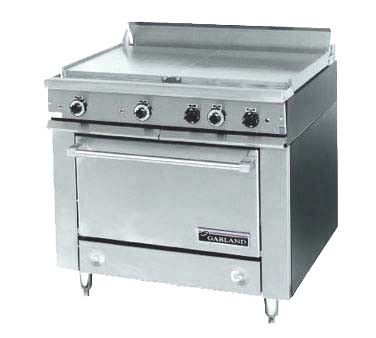
Electric ranges are more common and what most people are likely used to cooking on. Because it takes an electric burner a little longer to warm up, overall cooking times may be slightly longer than when cooking on a gas stovetop. This also means that any adjustments made to the heat while cooking will also take a few minutes to take effect and that any food left on a burner after it has been turned off will continue to cook for several minutes as the burner gradually cools down. Unlike gas stovetops however, most electric ranges now have a smooth, even surface although electric models with coil-top burners are still common in older residences. This smooth surface not only makes the stovetop easier to clean after use but also provides additional counter space when it isn't being used. Users should still be careful when cooking on this even as the surface can shatter if it is ceramic and something heavy is dropped on it hard enough and the finish can become scratched from dragging pots and pans across the surface.
Electric oven distribute heat more evenly than gas ovens and the heat inside the oven is drier because there is less moisture in the air. This means that electric ovens are good for roasting dishes and can provide a more consistent heat for baking. Being powered by electricity, however, also means that electric ranges are susceptible to power outages. If the power in your home or restaurant gets knocked out, then the stove and oven are knocked out as well until power is restored.
There are pros and cons to both types of ranges. It is important to weigh each against what your home or restaurant's specific needs are to determine which type is better suited for your space.
Tagged Products
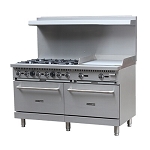
Black Diamond BDGR-6024G/NG - Range with Griddle, natural gas, 60", (6) burners, (2) standard ovens
Black Diamond BDGR-6024G/NG
$3,317.99 Each
Usually Ships in 24 Hours.
Free Shipping
Usually Ships in 2 - 3 Business Days

(Discontinued) American Range ARROB-636 - 36" Performer Series Residential Gas Range
American Range ARROB-636N
$5,939.00 Each


$9,489.00 Each